
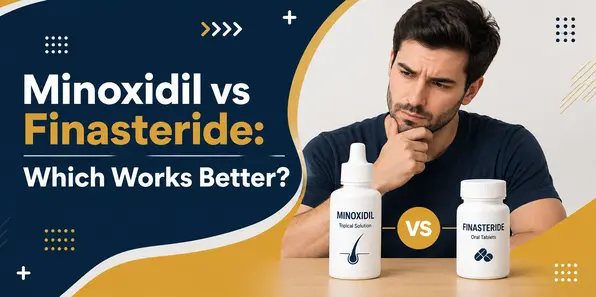
While men and women experience hair loss differently, both sexes have a myriad of options when it comes to hair loss treatment. As with any hair loss treatment, understanding the cause behind your hair loss, age, medical history, and even your intended treatment goals is important.
Although medicines can alleviate hair loss for some, treating advanced hair loss may require more specialized, and in some cases, more invasive measures like a hair transplant in Raipur.
What Is Minoxidil?
Pattern hair loss is the condition Minoxidil is most known for treating. It is a topical treatment and comes in varying strengths as well as different formulations, solutions or foams.
The primary functions of Minoxidil include delaying the resting phase of the hair growth cycle of the hair follicle as well as prolonging the growth phase. The result is the development of weakened hair into visible,stronger hair.
To get the full benefits, Minoxidil must be used regularly. It is applied to the affected area by the person, usually the scalp. The benefits of use will be temporary and begin to reverse if the treatment is stopped.
Minoxidil may help to:
- Slow down the process of hair loss
- Improve hair thickness
- Be used by both men and women
- Does not involve surgery
- Is best used in the initial stages of thinning hair
Many people notice hair shedding after starting minoxidil. This increases as the hair growth cycle changes, but also goes away after a little while. If you experience any long term side effects, be sure to talk to your doctor.
What Is Finasteride?
Finasteride is a prescription drug used for the treatment of male pattern hair loss. It targets the hormone DHT. Finasteride is designed to help slow hair loss by blocking the production of DHT.
DHT is an androgen that plays a role in the loss of hair. As DHT binds to hair follicles, the hair shrinks. Finasteride can help slow and maintain hair loss by lowering DHT.
Finasteride is intended for male use only. Finasteride, in the crushed or broken form, is harmful to male fetus development. All women, not just pregnant women, need to exercise caution and avoid exposure to the medication. Finasteride is not for women.
Benefits of Finasteride
- Hair loss treatment to lower levels of DHT
- Helps to maintain hair loss for men
- Can support improvement of hair growth
- Helps enhance hair growth
Which Works Better: Minoxidil or Finasteride?
There is no definitive answer to whether minoxidil or finasteride is more effective, because they have different mechanisms. There are limited cases of doctors putting their patients on both medicines.
Results are subjective and depend on multiple factors including the duration of hair loss, genetics, and the consistency of the treatment.
How Long Does It Take To See Results?
Growing hair takes time. Therefore, you can not expect immediate results with either treatment.
Some users have experienced results with minoxidil after a few months of use. The same applies to finasteride. Most users have to use finasteride for a few months before they see any benefits.
You should not discontinue either treatment in the first few weeks because of a lack of visible results. Your doctor will keep an eye on things and decide if you need to continue with your treatment or modify it.
Possible Side Effects
Like other treatments, minoxidil and finasteride come with some side effects.
Some common side effects of minoxidil include:
- Scalp irritation or dryness.
- Itching.
- Some users have reported the growth of facial hair.
- Shedding while beginning treatment is common.
Sexual side effects are commonly reported with the use of finasteride including erectile issues and decrease in sex drive.
When Should You Consider Hair Transplantation?
Medications can only help in managing hair loss. They cannot help in growing hair in areas where the hair follicles have been lost permanently. You may consider a hair transplant in Raipur if you have significant baldness or advanced pattern hair loss after a proper evaluation.
Healthy hair follicles from a donor area are moved to an area with hair loss during a hair transplant. Your doctor will also suggest why you continue to use medications in order to help protect the hair that has not been transplanted.
The cause and severity of hair loss determines the correct course of action. A professional can conduct a series of assessments regarding hair density, the scalp, and the donor area to determine a course of action.
Final Thoughts
When approaching minoxidil vs finasteride, both play their respective roles in the management of pattern hair loss. Minoxidil promotes hair growth, while finasteride focuses on the reduction of DHT. Some patients may be better suited to one or the other, while others may require both. If you have lost a considerable amount of hair, consult a hair loss specialist to find out about hair transplant in Raipur to see what your options are andA create your treatment plan accordingly.